 LearnSportsBetting
Live Betting (In-Play) Explained
Learn how live (in-play) betting works: dynamic odds, popular markets, practical strategies, tools, hedging, and risk management for in-game wagering.
Live Betting (In-Play) Explained
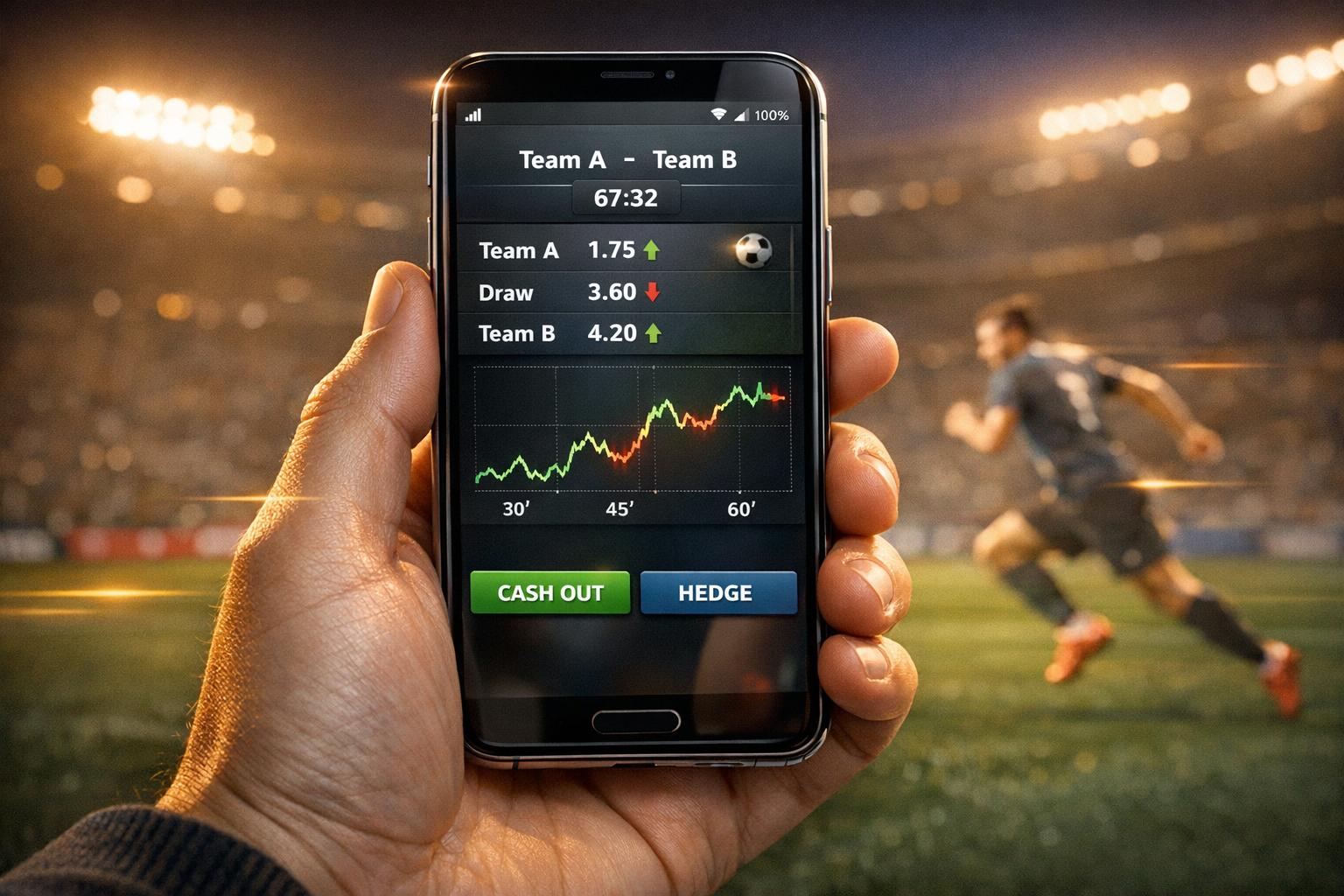
Live betting, also known as in-play betting, allows you to place wagers during a live sports event rather than before it begins. Unlike traditional betting, odds in live betting change constantly based on real-time game developments like scores, momentum shifts, injuries, or time remaining. This fast-paced format requires quick decision-making and offers unique betting options, such as predicting the next team to score or the outcome of a specific play.
Here’s what you need to know:
- Dynamic Odds: Odds update every few seconds based on live game data.
- Markets: Options include next team/player to score, updated point spreads, and totals.
- Tools: Use odds trackers, calculators, and real-time stats to make informed decisions.
- Strategies: Look for overreactions in odds, hedge bets, or capitalize on momentum shifts.
- Risks: Odds often have a higher house edge (-115 to -130) compared to pre-game bets (-110).
Live betting offers a more interactive way to engage with sports, but it requires preparation, discipline, and a solid understanding of the game to succeed.
How Live Betting Works
Real-Time Odds and Dynamic Betting
Live betting operates in a high-speed environment where odds can shift in mere seconds. These odds are recalculated by computer algorithms that process live game data, taking into account factors like the score, time remaining, momentum changes, injuries, and even weather conditions for outdoor events.
Modern sportsbooks rely on streaming technology to handle this massive influx of data, updating odds with minimal delay. This allows them to process thousands of events per second, ensuring bettors see the most up-to-date odds possible.
"In the sports betting industry, where odds change by the second and bettors expect immediate responses, batch processing falls short. The delay inherent in batch methods leads to outdated odds, missed betting opportunities, and increased risk exposure."
– Mitchell Gray, Ververica
Sportsbooks adjust their lines in real time based on game developments, betting activity, and key moments. During pivotal plays, they may even freeze the market temporarily to reassess. However, a critical element to consider is the broadcast delay - what you see on TV or a streaming device is often a few seconds behind the live action. To counteract this, sportsbooks typically add a 5-second delay to their platforms to align with broadcast latency.
This rapid pace makes live betting both an exciting and demanding endeavor, requiring quick decision-making and a solid understanding of the game.
Placing Bets During the Game
With odds changing constantly, placing a live bet demands speed and a clear plan. Start by logging into your sportsbook account and heading to the "Live" or "In-Play" section. Here, you'll find a list of current games with dynamically updating odds. Select your game of interest and choose from available markets, such as the next team to score, updated point spreads, or adjusted totals.
Once you've picked a market, enter your stake and review the odds. If the odds change while you're entering your bet, the sportsbook will typically show you the new odds and ask for confirmation before finalizing. Keep in mind that favorable odds may only last 10–20 seconds before they shift or the market closes.
"When betting into a live market, you're often receiving odds from a computer algorithm rather than a human oddsmaker... a computer doesn't account for things like injuries or momentum the way a human would."
– Tony Farmer, OddsShark
To improve your chances, try placing bets during natural pauses in the game, like timeouts, commercial breaks, or between innings. It's also worth noting that live betting often comes with a higher house edge than pre-game betting, with spreads sometimes reaching –130 compared to the usual –110.
A smart strategy is to fund accounts at multiple sportsbooks ahead of time. Different sportsbooks use different algorithms, which means odds for the same event can vary. Comparing these odds in real time can give you an edge when every second counts. Additionally, pre-planning your approach can be beneficial. For example, decide in advance on scenarios like, "If the favorite falls behind by 10 points, I'll take the moneyline." This preparation allows you to act quickly when opportunities arise.
sbb-itb-3ff9055
Live Betting Tips Most People Overlook
Live Betting vs Pre-Game Betting
Live Betting vs Pre-Game Betting: Key Differences Comparison
Key Differences Between Live and Pre-Game Betting
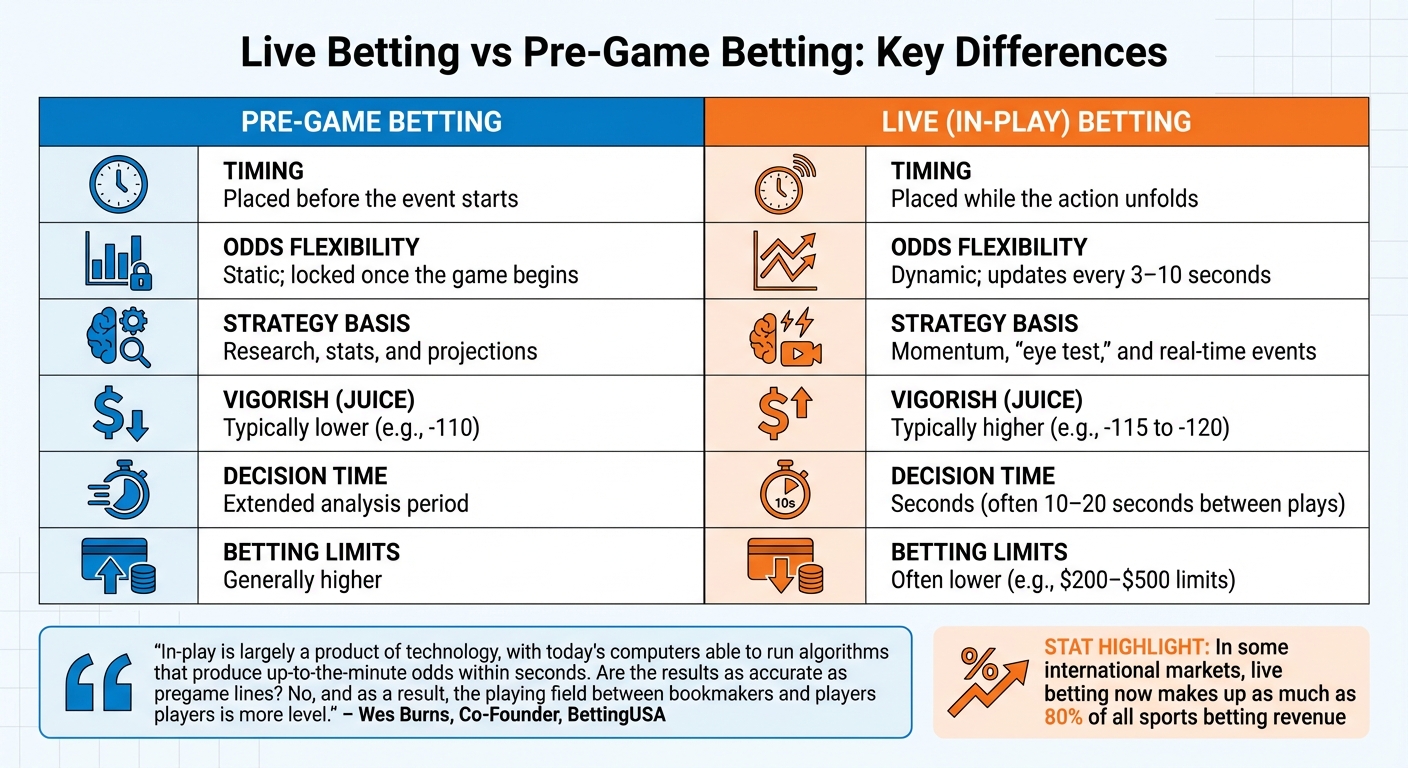
The main distinction between live and pre-game betting lies in timing. Pre-game bets are finalized before the game begins, while live bets are placed during the game as events unfold. This difference in timing significantly impacts how bets are approached.
Pre-game betting allows for careful preparation. You can analyze team matchups, consider injury reports, and study trends. In contrast, live betting requires split-second decisions, often within a 10 to 20-second window, as odds shift with every play you watch. Instead of relying solely on pre-game projections, live betting lets you react to real-time developments - like spotting a quarterback struggling or noticing a team's defense losing steam after a long drive.
The cost of wagering also varies between the two. Pre-game spreads usually feature -110 odds, meaning you would need to risk $110 to win $100. Live betting, however, often comes with steeper odds, ranging from -115 to -130, reflecting the added risk of fluctuating lines. Interestingly, in some international markets, live betting now makes up as much as 80% of all sports betting revenue.
"In-play is largely a product of technology, with today's computers able to run algorithms that produce up-to-the-minute odds within seconds. Are the results as accurate as pregame lines? No, and as a result, the playing field between bookmakers and players is more level."
– Wes Burns, Co-Founder, BettingUSA
Here’s a quick comparison of the two formats:
| Feature | Pre-Game Betting | Live (In-Play) Betting |
|---|---|---|
| Timing | Placed before the event starts | Placed while the action unfolds |
| Odds Flexibility | Static; locked once the game begins | Dynamic; updates every 3–10 seconds |
| Strategy Basis | Research, stats, and projections | Momentum, "eye test", and real-time events |
| Vigorish (Juice) | Typically lower (e.g., -110) | Typically higher (e.g., -115 to -120) |
| Decision Time | Extended analysis period | Seconds (often 10–20 seconds between plays) |
| Betting Limits | Generally higher | Often lower (e.g., $200–$500 limits) |
Live betting also opens up opportunities for creative strategies. For example, if the Indiana Pacers' lead causes the live line to shift from -7.5 to -14.5, you could bet on the opponent at +14.5. This could allow you to win on both sides, a tactic known as middling.
Common Live Betting Markets
Live betting thrives on its fast-paced and ever-changing nature. Once the game starts, pre-match options like moneylines, spreads, and totals instantly transform into live markets, with odds updating every 3 to 10 seconds based on the action on the field or court.
Some sportsbooks boast as many as 1,500 betting options per event. However, most bettors tend to focus on a few key markets. Below, we break down the most popular live betting markets and what makes them stand out.
Next Goal Scorer
The "Next Goal Scorer" market allows you to predict which player will score the next goal. For example, in soccer, the "First Goalscorer" market shifts to "Next Goalscorer" after the first goal is scored. Odds in this market can change drastically, especially when substitutions occur. If a fresh striker enters late in the game, their odds to score next might offer value before the line fully adjusts. Unlike broader team-based bets, this market requires sharp attention to individual player factors like fatigue, body language, and shot selection.
One challenge here is the higher vigorish, as sportsbooks account for quicker odds changes and greater unpredictability. Another factor to consider is the delay in TV and streaming feeds, which often lag 5 to 30 seconds behind the sportsbook's live data. This can result in odds shifting before you even see the play unfold.
Total Points Over/Under
This market lets you bet on whether the combined score of both teams will go over or under a specific number. The line adjusts in real-time based on the current score and how much time is left in the game. For instance, in an NFL game with a pre-game total of 49.5, the live total typically drops by about one point every 72 seconds without any scoring.
Unexpected events, like a kickoff return touchdown, can inflate the live total. In these cases, betting the "Under" might hold value if the game's pace doesn’t justify the higher number. Similarly, in NBA blowouts, trailing teams often take more risks or face looser defenses, which can lead to a scoring surge that pushes the game "Over", even if the final outcome is already clear.
Next Team to Score
This market zeroes in on which team will score next, whether it’s a point, goal, or run. Odds here are influenced by factors like current possession, field position, and momentum. In football, this can include betting on the outcome of a specific drive - whether it ends in a touchdown, field goal, or punt. In hockey, the focus might shift to which team will capitalize on a power play.
Pay close attention to teams that are creating scoring opportunities but haven’t converted yet. For example, a team with high "shots on target" or multiple "corners won" in soccer could present solid value in this market.
Strategies for Live Betting
Now that we've covered how live betting works, let's dive into some strategies to fine-tune your approach and make the most of in-game opportunities.
Live betting isn’t just about reacting quickly - it’s about being prepared. Before the game even starts, study the teams, their tendencies, and how the game might unfold. This preparation helps you spot when live odds overreact to a single event, like a fluke touchdown or an unusual play.
"Successful in-game betting is less about predicting the next score and more about recognizing when the odds no longer accurately reflect what is likely to happen next." - TopEndSports
Here are some effective tactics for taking advantage of shifting odds during live play.
Bet Against Momentum
One of the most common mistakes sportsbooks and casual bettors make is overreacting to early-game events. For example, an opening touchdown or a quick scoring run in basketball can lead to odds swinging more than they should, creating opportunities for value bets. This is especially true when the early surge is due to rare events like turnovers or mistakes that don’t reflect the overall strength of the teams.
Take an AFC Divisional Round game as an example: a heavily favored team fell behind early due to unusual errors, causing their live odds to spike. Recognizing this as an overreaction allowed savvy bettors to capitalize when the team staged a predictable comeback.
Keep an eye on trailing favorites, especially when their deficits stem from unusual circumstances. Also, pay attention to subtle factors like player fatigue, body language, and coaching adjustments - these often hint at momentum shifts before they show up in the stats.
Hedge Bets During Live Play
Hedging is a smart way to manage risk or secure profits on a pre-game wager by betting on the opposite side during the game. For instance, say you bet on the Lakers at -3.5 before the game, and they build a 12-point lead. You could hedge by betting on their opponent with a live line of +10.5. If the final score falls within that range, both bets win.
The best time to hedge is during natural breaks, like timeouts or halftime. Placing hedges mid-play can be risky since odds can change quickly or bets might get suspended.
"Chasing losses with impulsive live bets is a sure way to lose money." - Jimmy Boyd, BoydsBets
In-Play Trading and Arbitrage
If you want to go beyond hedging, consider strategies like in-play trading or arbitrage to maximize your live betting opportunities.
- In-Play Trading: This involves "buying low" on a team that’s trailing early and then "selling" by hedging once they regain momentum. If the game flow works in your favor, this approach can lead to significant profits, and sometimes even a chance to win both sides of a middle.
- Arbitrage: This strategy takes advantage of price differences between sportsbooks. By betting on all possible outcomes across different books, you can lock in a profit no matter how the game ends. While the margins are smaller, the profits are consistent.
| Strategy | Primary Goal | Profit Potential |
|---|---|---|
| In-Play Trading | Lock in profit or reduce exposure on a bet | High (potential to win both sides of a middle) |
| Live Arbitrage | Profit from price discrepancies between books | Lower (small, consistent margins) |
Both strategies require discipline. Live betting markets often come with higher vigorish - typically ranging from -115 to -130 compared to the standard -110 on pre-game spreads. This means you’ll need a higher win rate to stay profitable. And if your live feed lags behind or the game becomes chaotic, it’s better to skip the bet than to force a play.
Tools for Live Betting Analysis
When it comes to live betting, having the right tools at your fingertips can be the difference between making educated decisions and simply guessing. Live betting moves fast, and with odds shifting constantly, access to real-time data and calculators is crucial for spotting opportunities before they vanish. Let’s break down some of the key tools offered by LearnSportsBetting that can help you stay ahead of the game.
LearnSportsBetting Tools for Live Betting
LearnSportsBetting equips you with tools designed to make quick and informed decisions during live betting. One standout feature is the real-time odds tracker, which updates immediately after pivotal plays or momentum changes. This is especially valuable when comparing odds across multiple sportsbooks to secure the best price.
Another handy tool is the parlay calculator, which quickly calculates potential payouts for combined live bets. Since live odds change constantly, this tool saves you from fumbling with mental math and ensures you don’t miss out on opportunities. The EV calculator is equally important, helping you assess whether a live bet offers an edge by showing if the payout exceeds the true probability of the event. And if you’re looking to hedge your bets, the hedge calculator provides precise calculations on how much to wager on the opposite side to lock in profits or minimize losses.
How to Use Data for Real-Time Decision Making
Live betting isn’t just about reacting - it’s about using data to predict what’s coming next. For example, in basketball, tracking personal fouls can hint at when key players might sit, potentially shifting the game’s momentum. In baseball, keeping an eye on bullpen performance and the number of remaining at-bats for top hitters can help you make smarter Over/Under or run line bets.
"Many sharp bettors primarily live bet games as they can find more value there compared to pre-game wagers." - Dave Rathmanner, Founder & CEO, Odds Assist
Another key strategy is spotting overreactions early in games. For instance, if an underdog scores first or a favorite falls behind due to a fluke play, sportsbooks often adjust odds more dramatically than they should. By relying on stats, you can identify whether the trailing team is still the stronger side and capitalize on undervalued odds. Just remember, streaming delays can sometimes impact the accuracy of real-time data, so stay aware of potential lags.
Conclusion
Live betting opens doors to possibilities you won’t find in pre-game wagering. It lets you observe the game as it unfolds, evaluate real-time performance, and take advantage of shifting odds. Whether you’re hedging earlier bets, reacting to sudden odds changes, or identifying undervalued opportunities, live betting offers a dynamic edge.
That said, these advantages come with risks. Success in live betting demands a disciplined approach and a well-thought-out strategy. Keep in mind that live markets often have steeper odds - typically around -114 compared to the standard -110 - meaning you’ll need a slightly higher win rate just to break even. If a live bet doesn’t feel right, it’s better to skip it than to risk chasing losses. Each in-play wager should stand on its own, guided by value rather than emotion.
To make informed decisions quickly, use tools like odds calculators and real-time line trackers. These resources can help you spot opportunities and act efficiently. Pay attention to physical cues such as player fatigue, coaching decisions, or momentum shifts - they often provide timely and valuable insights.
Equally important is managing your risk effectively. Live betting moves fast, so it’s crucial to set aside a specific portion of your bankroll - ideally 1% to 5% - for in-play wagers. Placing bets during natural breaks, like timeouts or halftime, can also help you avoid suspended markets. Stay focused, use your resources wisely, and treat live betting as a skill that requires practice and precision, not as a shortcut to quick wins.
FAQs
What makes live betting different and more exciting than pre-game betting?
Live betting offers a completely different experience compared to pre-game betting. Instead of locking in your wagers before the action begins, you can place bets while the game unfolds. This dynamic setup lets you react to real-time events - whether it’s a sudden momentum shift, an unexpected injury, or a crucial scoring play. The odds are constantly updated to reflect the current situation, keeping you on your toes.
What makes live betting even more engaging is the range of micro-betting options. You can wager on quick outcomes, like who will score the next goal or what the result of the next play will be. These fast-paced bets not only add excitement but also make the experience feel more interactive and strategic. For those who can stay sharp and adapt to the game’s flow, live betting can present opportunities to spot better value and make smarter decisions as the action unfolds.
What are the best ways to manage risks when live betting?
Managing risks in live betting calls for a mix of discipline and smart decision-making. A good starting point is to wager smaller amounts. This helps minimize losses, especially since live odds can shift in the blink of an eye. Timing is also critical - placing bets during natural breaks in the game, like timeouts or quarter breaks, allows you to think clearly and avoid snap decisions based on sudden changes.
Keep a close eye on in-game dynamics, such as momentum swings, player injuries, or coaching strategies. These elements can offer clues about how the game might progress. It’s equally important to steer clear of emotional betting during high-stakes moments, as these situations often cloud judgment and lead to mistakes. Most importantly, stick to a strict bankroll management plan to ensure you stay within your financial limits. By focusing on timing, observation, and self-control, you can better navigate the risks of live betting and make smarter choices.
What tools can help me make smarter decisions while live betting?
When it comes to live betting, having access to real-time data and insights can make all the difference. One key resource is live odds, which constantly shift based on in-game events like scoring, injuries, or momentum swings. By keeping a close eye on these odds, you can identify opportunities and act quickly before the window closes.
Some advanced platforms take it a step further by offering algorithms that analyze in-game factors - like score changes, penalties, or the time remaining - to give you a clearer picture of the current situation. On top of that, tools featuring live game tracking, detailed stats, and instant updates ensure you stay informed during the fast-paced action. When used wisely, these resources can help you seize favorable moments and make strategic bets.


